
Artist: V.A.
Title: Región 4
Label: Filtro
Catalog #: [FILTRO.019]
Release Date: 2006/08/25
El consumo de tecnología ha zonificado al mundo una vez más y Filtro aprovecha este fenómeno como pretexto para presentar Región 4; recopilación en la que se crea un diálogo entre la música dancehall jamaicana, el regaetton y el dubstep; sus aplicaciones en la música bailable vía el grime inglés y los sonidos y tendencias propios de los artistas del sello, agrupadas principalmente dentro de los terrenos del dancefloor minimal y el idm.
Región Cuatro presenta a los más recientes afiliados de Filtro: Rivel (California) y The Copy Violators (Jalisco, Mex) así como a otros miembros del sello: Destreza, Kampión, Karras, Lao, Mhv y Plug. De los oscuros y pesados bajos, las deconstucciones de soca y las reinterpretaciones minimal del dancehall, al reggaeton fragmentado y los sobresaltos del cut and paste digital vueltos dancehall, Región 4 es el soundtrack creado para una época cuya cultura popular ha sido marcada por el constante ir y venir de la música caribeña y sus diferentes lecturas.
Consumption of new technology has again divided the world into zones; Filtro takes advantage of this phenomenon and uses it as a pretext to release Region 4; a new compilation which generates a dialogue between Jamaican dancehall music, reggaeton, dubstep, its applications dance music trends suchs as UK’s Grime as well as the own minimal and idm sounds from our label’s musicians.
Región Cuatro incluyes Filtro’s most recent affiliates: Rivel (California) and The Copy Violators (Jalisco, Mex) as well as members and friends of the label, such as: Destreza, Kampión, Karras, Lao, Mhv and Plug. From dark, heavy basses, soca’s deconstructions and minimal reinterpretations of dancehall music to fragmented regaetton and digital “cut and paste” turned dancehall, Región 4 is the soundtrack for an age where the popular culture has taken a lot from the constant flow of Caribbean music and it different approaches.
–
Las borrosas fronteras geográficas que produce la digitalidad global, se materializan de forma sonora en la nueva exploración de Filtro: Región 4. El intercambio cultural que se produce a través de los medios digitales ha generado una maleabilidad cultural. Como una migración que traza una ruta rizomática, carente de un centro, un punto de partida específico, la trayectoria del dub y sus derivados, filtrada a través de fenómenos como el grime y el dubstep inglés, y reencontrándose con elementos locales específicos, está presente hoy más que nunca en un gran espectro de la cultura popular: desde el boom del reggaeton en la radio de todo el mundo, hasta la imagen de los canales de videos. El reconocimiento de estos múltiples ritmos y sonidos como parte de sus raíces gira en la órbita de varios de los productores independientes de música electrónica mexicana.
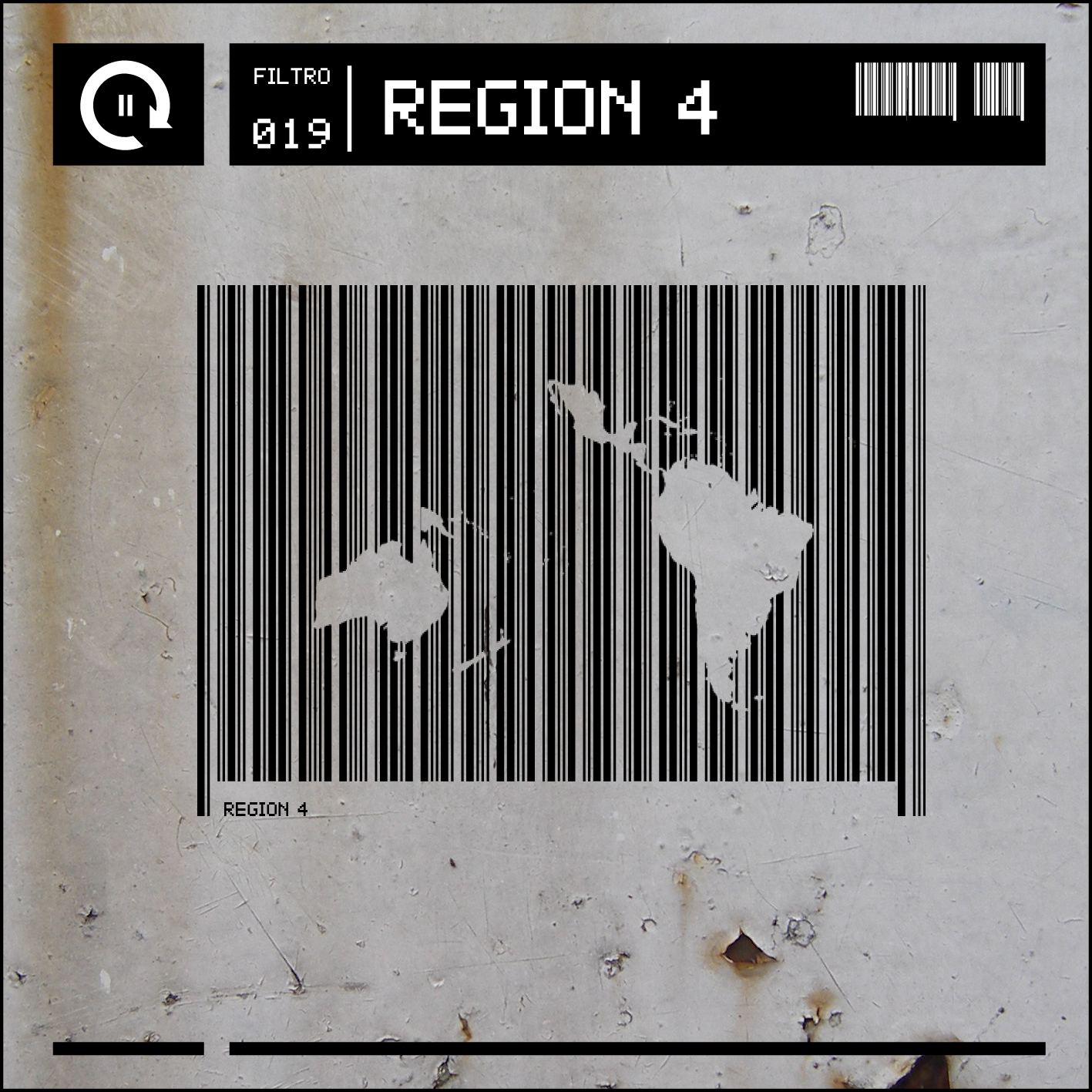
En Región 4 se crea un diálogo entre la música dancehall jamaicana, el reggaeton y los sonidos y tendencias propios de los artistas del sello, las cuales se agrupadan principalmente dentro de los terrenos del dancefloor minimal y el idm. Así, sonoridades provenientes de la Región 4 [la cual incluye Australia, Nueva Zelanda, islas del Pacífico, América Central, México, Sudamérica y el Caribe] confluyen en un mismo punto para ser transformadas en un híbrido que además de dar lo suficiente para reflexionar en torno al circuito tecnología/cultura pone de manifiesto tanto las influencias como la evolución y la identidad musical renovada del sello. Resulta paradójico que códigos regionales creados arbitrariamente para controlar el acceso a contenidos digitales dependiendo la zona geográfica, funcionen inversamente a nivel conceptual para producir una reinterpretación de los sonidos de la región .
La más reciente incorporación al catálogo de Filtro, Rivel, productor oriundo de California, expone su visión Ruff Bizzness del dancehall, a través de oscuros bajos que se fusionan vocales de raíces isleñas. Karras in dub contribuye con sus distintivas resonancias dubby y ecos de textura metálica que rinden tributo a las raíces más clásicas del dub con su track “Río bamba”, mientras que Lao, decide abordar al género desde la perspectiva del minimal techno, creando con su particular track “Zooka”,una fusion contundente del dub análogo con el digital.
Con “Bitskit”, Plug reduce el dancehall a mínimas frecuencias frías y digitales, que de alguna forma logran conservar la cálidez propia del dub. En la línea de sonidos pensados para la pista de baile, Destreza, ejecuta su visión de la soca, alterando el espíritu soul de este género y utilizando texturas vidriosas para amplificar el ritmo del calipso, creando con “Like tigers in the back of your seat car”, un equilibrio sonoro entre ritmos orgánicos y matices digitales.
Amplificando la temperatura sonora del reggaeton y dispuesto a llevarla al límite técnico de la música laptop, MHV altera las frecuencias de este género masivamente aclamado y fusiona con drills en “38 grados”. Los sobresaltos del cut and paste digital toman forma de dancehall en el track de los Copy Violators, dupla tapatía próxima a presentar un ep en Filtro. Kampion, aborda las posibilidades electrónicas de la música caribeña con el track “Popotla Sound Machine”, una desconstrucción total del reggaeton para ofrecer un sonido bailable de multiples fragmentaciones, el track cuenta con el apoyo visual del primer netvideo de Filtro, el cual fue creado por Arturo Gil de Xnografikz, utilizando la misma técnica de microsampling de audio, para la producción visual. Con el lanzamiento online de este video, entramos en una nueva etapa en la que asumimos con mayor compromiso los aspectos gráficos, visuales y de diseño y en la que buscamos romper con nuestros propios esquemas, dejando en evidencia nuestros orígenes multidisciplinarios.
The blurry geographic frontiers produced by digital globality materialize in the shape of Filtro’s new search: Región 4. The cultural exchange produced through the digital medium has generated a cultural malleability. Much like a migration that traces a center less, rhizomatic path without a defined starting point, the trajectory of Dub and all of its derivations, filtered through phenomena like grime or British dubstep, and finding itself again with specific local elements, is present today more than ever in a great spectrum of pop culture: from the reggaeton boom in worldwide radio, to the image of music channels. The recognition of these various rhythms and sounds as part of its roots rotates in the orbit of anything but few Mexican independent electronic music producers.
Región 4 creates a dialogue between Jamaican dancehall, reggaeton, and the sounds and tendencies of the label’s own artists, who usually group themselves in the realm of minimal dancefloor and IDM. This way, sonorities pertaining to the region 4 (which includes Australia, New Zealand, the pacific islands, central America, Mexico, South America, and the Caribbean islands) flow through the same point to be transformed into a hybrid that not only gives enough to reflect on the technology/culture circuit, but also puts into a manifesto the influences, evolution, and the label’s renovated musical identity. It results paradoxical that arbitrarily generated regional codes created to control the access to digital content depending on the geographical zone work in an opposite fashion at a conceptual level to produce a new interpretation of the sounds of region 4.
The newest addition to Filtro’s catalogue, Rivel, a California native producer, exposes his vision Ruff Bizzness from dancehall through obscure lows fused with island rooted vocals. Through his track “Rio Bamba”, Karras in dub contributes his distinctive dubby resonance and metallic textured echoes to offer tribute to dub’s most classic roots, while Lao decides to engage the genre from the perspective of minimal techno, creating a peculiar track called “Zooka”, a clear fusion of analogous and digital dub. With “Bitskit”, Plug reduces dancehall to mere cold and digital frequencies that manage in someway to keep dub’s singular warmth. In the line of sounds designed for the dance floor, Destreza executes his vision of soca, changing the soul spirit of this genre and using glassy textures to amplify the rhythm of calypso, creating a sonorous equilibrium between organic rhythms and digital variations with “Like tigers in the back of your car seat”.
Amplifying the sonorous temperature of reggaeton and set to take it to the technical limit of laptop music, MHV alters the frequencies of this massively acclaimed genre and fuses drills in “38 grados”. The overlaps of digital cut and paste take the shape of dancehall in the track of the copy Violators, a duet from Guadalajara next to present an ep with Filtro. Kampion engages the electronic possibilities of Caribbean music with the track “Popotla Sound Machine”, a complete deconstruction of reggaeton that offers a danceable sound of various fragmentations. The track counts with the visual support of Filtro’s first netvideo created by Arturo Gil from Xnografikz using the same technique of audio microsampling for visual production. With the online release of this video, we enter a new stage where we assume a great dedication to the aspects of graphics, visuals, and design and a search for the deconstruction of our own schemes, leaving in evidence our own multi-disciplinarian origins.
Tracklist:
01 – Kampion – Popotla Sound Machine
02 – Plug – Bitskit
03 – MHV – 38 Grados
04 – Rivel – Ruff Bizzness
05 – Destreza – Like Tigers in the back seat of your car
06 – Karras in dub – Rio Bamba
07 – The Copy Violators – Raggatron
08 – Lao – Zooka
Artwork:
Front Cover
License:
Attribution-NonCommercial-NoDerivs 2.0 Generic (CC BY-NC-ND 2.0)


You must be logged in to post a comment.